
Better brain health starts here
Regardless of age, the brain has the ability to change and adapt.
This remarkable ability is known as neuroplasticity. Neurofeedback uses this natural process to help improve brain functioning.
During a session, sensors placed on the scalp measure the brain’s activity in real time. This information is translated into auditory and visual feedback through a simple video game. The brain is able to “see” when it is producing too much or too little of certain brainwave patterns and, through neuroplasticity, begins to adjust and regulate itself. Over time, this can lead to improved symptom control and greater brain resilience.
Think of neurofeedback as exercise for the brain. By strengthening areas that are not functioning efficiently or supporting areas we want to keep healthy, the brain can learn to operate more effectively overall.
Although it may sound intimidating at first, neurofeedback is gentle and non-invasive, and most people find the process enjoyable.
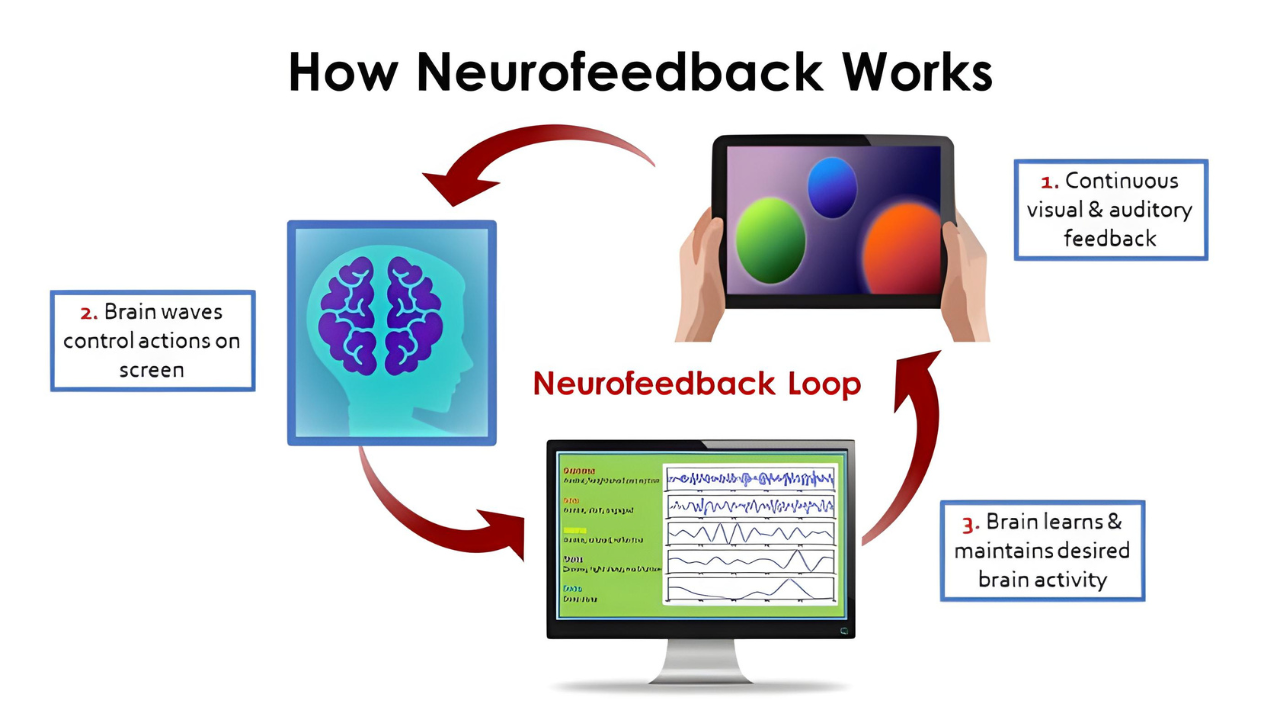
Many people are looking for alternative interventions to help the brain remain healthy and functional throughout life. Neurofeedback is a non-invasive, non-medication intervention to promote brain health and wellness.
Are neurofeedback changes permanent?
The results from brain training with neurofeedback should be long-lasting for anyone, across any age range.
Factors that can impact whether the changes are maintained long-term include: the number of neurofeedback sessions, what the target of neurofeedback was, if new targets are identified, whether there are underlying untreated health issues, and future health issues such as a head injury. If someone has new injuries or stressors, booster neurofeedback sessions can be very helpful. Like having learned to ride a bike, even if you haven’t ridden for decades, your brain quickly remembers how to keep you steady and moving forward. Neurofeedback is similar in that it is a learned practice.
How safe is neurofeedback?
Decades of research show that neurofeedback is very safe, particularly when done with trained and experienced professionals. Side effects are rare and tend to be nothing more than mildly annoying. The most common side effects are fatigue and mild headache, typically when first starting neurofeedback. Think of this like when one first starts exercising. Your muscles are sore because they are not used to the activity. However, with consistency, the soreness lessens and soon isn’t an issue. Same thing is true with the side effects with neurofeedback…once the brain is used to training the side effects tend to go away. However, the vast majority of people who do neurofeedback never experience any side effects.
What can I expect from neurofeedback?
The number of sessions and timing of intervention are specific to the individual. In our program, sessions are scheduled twice a week for 45 minutes each session, with up to 30 minutes of direct training occurring during each session. You sit in a comfortable chair with one or two sensors (electrodes) on the scalp that monitor brain wave activity. Like a stethoscope allows us to hear the heartbeat, the sensors allow us to see brain activity. Also like a stethoscope, we are not able to put anything into the brain (i.e., electrical activity)…we can simply monitor the brainwave activity. While training, you watch a game that simulates your brain activity, as well as hear auditory cues. When your brain is creating adaptive, healthy patterns, the game progresses and the sound is heard. If it creates too much or too little of brainwave patterns that aren’t as functional, the game and sound stops. The brain learns to create more of what it should and less of what it shouldn’t over time resulting in improved functioning and observable changes.